

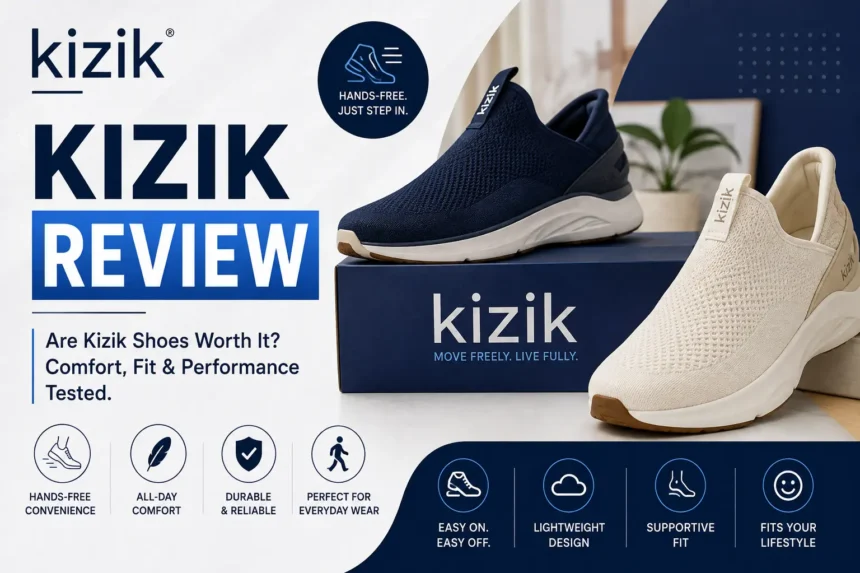
Buying sneakers is usually pretty straightforward. You find a pair you like, choose your size, put them on, tie the laces, and head out.
Kizik looked at that routine and decided one part of it didn’t really need to exist.
The whole brand is built around the idea that you should be able to put your shoes on without sitting down, bending over, or reaching for the heel. You step into the shoe, and you’re ready to go.
At first, I thought this sounded like one of those features that is nice to have but probably not important. After all, tying shoes doesn’t take long.
But the more you think about everyday situations, the more the idea starts to make sense.
You’re rushing out of the house. Your hands are full. You’re carrying groceries. You’re at the airport. Maybe you’re holding a child. Or maybe you simply don’t want to bend down every single time you put your shoes on.
More Read

That’s where Kizik starts to become interesting.
The bigger question, though, is whether the shoes are worth buying beyond the hands-free feature. Convenience is great, but nobody wants to spend good money on a shoe that feels uncomfortable after a couple of hours.
So, for this Kizik review, I’m not treating the hands-free design as enough of a reason by itself. Comfort, fit, quality, durability and everyday wear matter just as much.
What Is Kizik?
Kizik is a footwear brand best known for its hands-free shoes.
Unlike a regular sneaker, the back of a Kizik shoe is designed to give way when you step into it. Instead of crushing the heel and then reaching down to pull it back into place, you can step directly into the shoe. The heel is designed to return around your foot once you’re in.
The first thing I like about the idea is that Kizik hasn’t made its shoes look overly complicated.
If someone saw you wearing a pair from across the room, they probably wouldn’t immediately know it was a hands-free shoe. Most of the designs still look like ordinary sneakers.
And honestly, that matters.
Hands-free footwear could easily end up looking like a niche product made for one specific group of people. Kizik has tried to avoid that. The shoes are meant for anyone who likes the convenience, whether that’s a busy parent, an older adult, a traveler, or just someone who is tired of dealing with laces.
You don’t need a particular reason to appreciate being able to put your shoes on more easily.
The Hands-Free Feature: Is It Actually Useful?
This is probably the first thing most people wonder about.
Is stepping into a shoe really that much better than putting on a normal sneaker?
For some people, probably not.
If you’re young, flexible, never in a hurry and have no problem tying your shoes, Kizik’s main feature may feel like a luxury rather than a necessity.
But convenience has a funny way of becoming more valuable once you get used to it.
Think about automatic doors. You can obviously open a normal door yourself. But when your hands are full, you immediately appreciate not having to.
Kizik works in a similar way.
You don’t necessarily need hands-free shoes. But there are plenty of situations where you may enjoy having them.
What I think makes the concept work is that you aren’t giving up the look of a normal sneaker just to get that convenience. A Kizik shoe still has the general appearance of something you would wear every day.
The real test is whether the heel feels secure once you’re walking. If the shoe is easy to step into but your foot keeps slipping around, then the whole idea falls apart.
That is why the individual model matters. Kizik doesn’t make just one shoe, and the experience can vary depending on the design, materials and level of cushioning.
Kizik Athens Review
The Athens is one of the Kizik styles that feels easiest to imagine as an everyday shoe.
It has a sporty look, but not in a way that makes it seem like you need to wear workout clothes with it. You could wear it while running errands, commuting, traveling, or just going about a normal day.
That’s probably where Kizik makes the most sense anyway.
The brand isn’t asking you to completely change the way you dress or use your shoes. It is taking something familiar—a regular sneaker—and trying to remove one small inconvenience from it.
The Athens fits that idea well.
It doesn’t look like a novelty product. If you didn’t already know about Kizik, the hands-free design probably wouldn’t be the first thing you noticed.
That is a good thing.
Personally, I think a first-time Kizik buyer would probably find the Athens easier to understand than some of the other styles. It looks like the type of sneaker most people are already comfortable wearing.
You step in, and that’s really the point.
Kizik Vegas Review
The Vegas has a more casual feel.
Where the Athens leans toward the modern sneaker look, the Vegas feels easier to picture with jeans, chinos or other everyday clothing.
This is one of the things I find interesting about Kizik. The brand could have taken its technology and placed it into one generic athletic shoe. Instead, there are different styles for people who don’t all dress the same way.
The Vegas is probably a better match for someone who wants a shoe for everyday life rather than something that looks like it belongs in a gym.
And this is where the hands-free feature starts feeling less like a gimmick.
Imagine using the same pair every day. Leaving home in the morning, coming back, taking them off, putting them on again later. The process is simple enough that you stop thinking about it.
That might sound like a small thing, and it is. But sometimes the best product features are the ones you barely notice once they become part of your routine.
You just step in and leave.
Kizik Madrid Review
The Madrid has a more modern sneaker feel and sits somewhere between casual and active everyday wear.
Not everyone needs a shoe designed specifically for running. At the same time, a lot of people don’t want an extremely flat, basic casual sneaker either.
The Madrid makes sense for someone looking for something they can wear through a busy day.
Maybe you walk to work, move around during the day, run errands afterward and don’t really want to think too much about changing shoes.
That’s the kind of lifestyle where Kizik’s idea becomes more practical.
I also think it is important not to judge Kizik only by the hands-free technology. Once you get past that feature, you still have to ask the same questions you would with any other sneaker.
Does it fit properly?
Is there enough cushioning?
Does your heel feel secure?
Can you wear it for several hours without wanting to take it off?
Those questions are more important than how quickly you can put the shoe on.
The Madrid is one of the models that makes Kizik feel like a proper sneaker brand rather than a company built around one clever feature.
Kizik Prague Review
The Prague is the type of shoe I would look at more closely if comfort was my main concern.
Convenience may bring people to Kizik, but comfort is what would make them come back.
A shoe can be incredibly easy to put on, but if your feet hurt after walking around for an hour, you’re probably not going to care much about the hands-free heel.
That is why the comfort side of Kizik is so important.
The Prague has a design that feels more focused on everyday wear and spending time on your feet. It still looks like a sneaker, which is something I think Kizik gets right across much of its collection.
Comfort shoes don’t always have the best reputation when it comes to style. Sometimes they look exactly like what they are: shoes designed mainly for practicality.
Kizik seems to be trying to avoid that.
The Prague is for someone who wants convenience, but doesn’t want to feel like they’re buying a special-purpose shoe.
You can simply wear it as a sneaker.
And for many people, that’s enough.
Kizik Isn’t Just for Older Adults
This is something worth mentioning because hands-free shoes can easily be misunderstood.
Yes, Kizik can be useful for older adults or people who find bending down difficult. That is obvious.
But that doesn’t mean the shoes are only for them.
A parent carrying a child may appreciate being able to step into their shoes.
Someone traveling with luggage may appreciate it.
A person recovering from an injury might find it useful.
Someone who has to take their shoes on and off multiple times a day could enjoy the convenience.
Or you might simply be lazy about shoelaces.
That’s completely fine too.
I think Kizik works best when you stop thinking about who the shoe is supposed to be for.
If the hands-free feature sounds useful to you, then you’re part of the potential audience.
It really is that simple.
Comfort, Fit and Everyday Wear
The hands-free feature is what gets most people interested in Kizik. But after you’ve stepped into the shoes a few times, that novelty wears off. Then you start judging them the same way you would any other sneaker.
Are they comfortable?
Do they feel supportive?
Can you walk in them for hours?
And perhaps more importantly, does that unusual heel actually feel secure once you’re moving around?
Those are the things that really determine whether Kizik is worth buying.
How Comfortable Are Kizik Shoes?
Comfort is always subjective, so I wouldn’t say every Kizik shoe will feel amazing to every person. Your foot shape, preferred level of cushioning and the type of shoe you’re used to wearing all make a difference.
Still, the general idea behind Kizik works well for everyday use because these aren’t designed as stiff dress shoes or extremely flat fashion sneakers. Most of the popular styles are built with casual, daily wear in mind.
If you’re coming from a heavily cushioned running shoe, some Kizik models may feel different from what you’re used to. On the other hand, if your current everyday shoes are something basic like canvas sneakers, the extra structure may be a noticeable improvement.
What matters is choosing the right style.
Someone who spends most of the day sitting in an office probably doesn’t need the same shoe as someone who walks around a large campus, travels frequently or spends several hours on their feet.
That’s one thing I would keep in mind before buying. Don’t choose a Kizik model just because you like the color. Look at how you actually plan to use it.
A shoe that feels great for quick errands may not automatically be the best choice for an eight-hour day.
Does the Hands-Free Heel Feel Secure?
This was one of the first things I wondered about Kizik.
When you hear that the heel is designed to collapse as you step into it, it is natural to ask whether the back of the shoe feels less stable while walking.
After all, with a traditional sneaker, the heel counter is usually one of the more structured parts of the shoe.
Kizik has to balance two completely opposite things. The heel needs to give way when you’re putting the shoe on, but it also needs to return to shape and hold your foot properly once you’re walking.
And that’s really the key to the entire product.
If the shoe constantly felt loose around the heel, the convenience wouldn’t be worth it.
The good thing about the Kizik concept is that you’re not meant to walk around with the heel collapsed. It compresses while you step in and then returns to position.
That said, fit still matters.
A hands-free mechanism can’t fix a shoe that is the wrong size. If the shoe is too large, you may still experience heel movement. If it’s too small, no amount of clever design will make it comfortable.
So don’t assume that because the shoe is easy to step into, you can be careless about sizing.
You still need the shoe to fit properly.
Kizik Sizing: Do They Run True to Size?
Sizing is one of the areas where I would avoid making a blanket statement.
Different people have different experiences with sneakers, and even within the same brand, one model can feel different from another.
The safest approach is to start with your usual sneaker size and then check the sizing guidance for the specific Kizik model you’re considering.
This becomes especially important if you’re between sizes.
With a traditional lace-up sneaker, you can sometimes make small adjustments by tightening or loosening the laces. Kizik’s design doesn’t give you the same level of flexibility in every situation.
You want the shoe secure enough that your heel feels properly held, but not so tight that stepping into it becomes uncomfortable.
If possible, measuring your foot before ordering is worth the extra two minutes.
It sounds obvious, but a lot of people rely on the size they wore in another brand years ago. Shoe sizing is not always consistent across brands, and your preferred fit may also change depending on whether you wear thin or thick socks.
For a first pair of Kiziks, I would pay more attention to sizing than I might with a basic casual sneaker.
The whole hands-free experience works best when the fit is right.
Are Kizik Shoes Good for Wide Feet?
This depends on both the model and how wide your feet are.
Some people with slightly wider feet may find certain styles comfortable, while others may feel pressure around the sides of the shoe.
The mistake would be buying a pair that feels painfully tight and expecting it to completely change after a few days.
Shoes can break in slightly. Materials can become more flexible. But a poor fit is still a poor fit.
If you usually have problems with narrow sneakers, take some time to check the width information and customer feedback for the exact Kizik model you want.
Don’t rely only on a general review saying, “Kizik is good for wide feet.”
One style may work well for you while another doesn’t.
That is true with almost every footwear brand, but it matters even more here because a secure fit is part of what makes the hands-free design feel natural.
Are Kizik Shoes Good for Walking?
For normal everyday walking, Kizik makes a lot of sense.
Walking to work, moving around town, shopping, traveling or running errands—these are the kinds of situations where the combination of sneaker comfort and hands-free entry feels practical.
The question becomes more complicated when we’re talking about long-distance walking.
There is a difference between walking around a shopping mall for an hour and spending an entire day exploring a new city.
If you’re planning to walk 15 or 20 kilometers every day on vacation, I wouldn’t choose any shoe purely because it is easy to put on.
Comfort, cushioning, arch support and the specific model become much more important.
Kizik does offer styles that are better suited to active everyday use, but I still wouldn’t automatically treat every Kizik shoe as a replacement for a dedicated walking or running shoe.
That’s not a criticism. Not every sneaker needs to do everything.
For normal daily walking, though, the concept works well. And the convenience becomes especially noticeable when you’re repeatedly taking your shoes on and off during the day.
What About All-Day Wear?
This is probably a better test than simply asking whether Kizik shoes are comfortable.
Lots of shoes feel fine when you first put them on.
The real question is what your feet think about them five or six hours later.
For all-day wear, I would pay attention to the model’s cushioning and overall construction rather than assuming every Kizik feels the same.
If your day involves mostly sitting, almost any reasonably comfortable sneaker may be enough.
If you work in retail, move around a large office, commute on foot or spend much of the day standing, comfort becomes more important.
This is where I think Kizik needs to be judged as a footwear brand, not simply as a company with clever technology.
The hands-free heel gets your foot into the shoe.
Everything else has to earn your money.
And that’s actually a good way to approach the purchase.
If you find a Kizik model that fits well and feels comfortable for your routine, the hands-free feature becomes a useful bonus that you’ll probably appreciate every day.
If the shoe doesn’t fit your foot properly, the technology alone won’t save it.
Cushioning and Support
One thing I like about Kizik’s general approach is that the shoes are not all trying to deliver exactly the same experience.
Some people prefer a softer feel underfoot. Others like a more stable shoe. Some simply want something lightweight for casual use.
The level of cushioning you need depends heavily on what you’re doing.
For walking around the neighborhood, a moderately cushioned sneaker may be perfect.
For standing on hard floors all day, you may want something with more support.
For running, you should consider whether the particular shoe is actually designed for that activity rather than assuming that a comfortable everyday sneaker will automatically perform well.
This is another reason I wouldn’t recommend buying Kizik solely because of the hands-free feature.
Think about it this way: if the shoe didn’t have hands-free technology, would you still want to wear it?
If the answer is yes, then the technology becomes an added advantage.
That is probably the best way to judge whether a particular Kizik model is right for you.
Are Kizik Shoes Easy to Put On?
Yes. This is where the brand does exactly what it promises.
The experience is particularly noticeable when you compare it directly with a normal sneaker.
With traditional shoes, you usually have to do at least one of these things:
Loosen the laces.
Pull the tongue forward.
Use your fingers to stop the heel from folding underneath your foot.
Sit down and adjust the shoe.
Kizik removes most of that process.
You step in.
For someone who has no problem bending down, that may sound like a tiny improvement. And honestly, it is.
But small improvements can become surprisingly useful when repeated every day.
That’s why I don’t think the value of Kizik should be judged by asking, “Is tying shoes difficult?”
Obviously, for many people, it isn’t.
The better question is, “Would I prefer not to do it if I didn’t have to?”
For plenty of people, the answer will be yes.
Kizik for Travel
Travel is one situation where Kizik makes more sense to me than I initially expected.
Airports often involve a lot of walking, waiting, carrying bags and occasionally taking shoes on and off.
Having a shoe that you can quickly step into is convenient when your hands are already occupied.
Of course, you still need to choose a model that feels comfortable enough for the amount of walking involved.
But as a travel shoe, the hands-free concept is genuinely useful.
The same goes for road trips.
Getting in and out of the car, stopping for food or fuel, and quickly putting your shoes back on are all small moments where the convenience can add up.
Would I buy a Kizik only because of travel?
Probably not.
But if I already liked the fit and comfort of a particular model, the hands-free feature would definitely be a point in its favor.
Kizik for Everyday Life
This is where the brand feels strongest.
Kizik shoes are not really about one particular activity. They fit into normal routines.
You wake up, get dressed and leave.
No sitting down to put your shoes on.
No adjusting the heel.
No retightening the laces before walking out.
For someone with a busy routine, that simplicity is appealing.
I also think Kizik works well as a second type of sneaker.
You might own running shoes for exercise and another pair for special occasions. Kizik can be the pair sitting by the door—the one you reach for when you just want to leave the house without thinking too much about it.
That, to me, is where the brand’s value becomes clearer.
How Durable Is the Hands-Free Design?
This is one of the most important long-term questions.
A normal sneaker heel is not usually designed to be stepped on repeatedly. If you crush the back of a standard shoe every day, eventually you may damage its structure.
Kizik is different because the heel is specifically designed to handle that movement.
Still, durability depends on more than just the mechanism itself.
How often are you wearing the shoes?
Are you using them casually or for demanding activities?
How much pressure are you putting on them?
How well do you take care of them?
Like any shoe, the materials and construction will eventually show wear.
I wouldn’t expect a pair of Kiziks to last forever simply because the heel technology is designed to rebound.
The better question is whether the convenience remains reliable throughout normal use.
For a brand built around hands-free entry, that is not a minor detail. It is the feature people are paying attention to from day one.
Who Will Get the Most Value From Kizik?
Kizik probably isn’t for everyone.
If you love traditional sneakers and enjoy choosing shoes mainly for their design, heritage or athletic performance, another brand may appeal to you more.
But Kizik makes a lot of sense for people who value convenience.
Busy parents are an obvious example.
Travelers are another.
People who struggle with bending down may find the shoes especially useful.
And then there are people who simply like the idea of stepping into a sneaker and walking away.
You don’t need a medical reason or mobility issue to appreciate convenience.
Personally, I think the strongest Kizik customer is someone who wears sneakers almost every day and wants the process to be as effortless as possible.
If that’s you, the brand starts to make a lot more sense.
Pricing, Value and How It Compares
By this point, the hands-free part of Kizik is easy to understand. The harder question is whether it is worth paying extra for.
That really comes down to how much you value convenience.
If you are happy with ordinary sneakers and don’t mind bending down or tying laces, Kizik may feel unnecessary. There is nothing wrong with a traditional sneaker, and plenty of brands offer comfortable shoes at different price points.
But Kizik isn’t really competing on the idea of “we make shoes.”
The pitch is closer to: we make putting on shoes easier without making you wear something that looks completely different from a regular sneaker.
Whether that is worth the price depends on the person.
For someone who only wears sneakers occasionally, probably less so. For someone who wears them every day, the convenience may start to feel more valuable.
Is Kizik Expensive?
Kizik sits above the cheapest casual sneaker brands, so these are not really impulse-buy shoes for most people.
The price can also vary depending on the model, materials and collection. Some styles are positioned as simple everyday shoes, while others are designed with more cushioning or a more athletic look.
Personally, I wouldn’t judge the price by comparing Kizik with the cheapest pair of sneakers you can find.
The better comparison is with other comfortable, everyday footwear brands.
When you look at it that way, the price makes more sense—but only if you actually care about the hands-free feature.
That’s the important part.
If you remove the hands-free technology from the equation and don’t particularly like the design, comfort or fit of the shoe, then there isn’t much reason to pay more just for the mechanism.
On the other hand, if you already like how the shoe feels and the ability to step into it makes your daily routine easier, then the extra value is easier to justify.
Does Kizik Offer Good Value for Money?
I think Kizik’s value depends more on the buyer than the shoe itself.
Take two people.
The first person wears sneakers once or twice a week and has no issue tying laces. They might try Kizik and think, “That’s convenient, but I don’t really need it.”
The second person wears sneakers every day. They leave the house several times, travel often, have their hands full, or simply hate dealing with shoes. That person may get much more value from the same pair.
That’s why I wouldn’t call Kizik universally expensive or universally worth the money.
For the right person, the convenience is part of the product experience every single day.
And unlike a feature that you might use once in a while, this one is something you notice every time you put the shoes on.
The bigger issue is still comfort. If you find a Kizik model that fits your feet well, then the hands-free design is a genuinely useful extra. If the fit isn’t right, paying more for convenience won’t fix that.
Kizik for Men and Women
One good thing about the Kizik lineup is that the brand doesn’t treat hands-free technology as something that only belongs in one type of shoe.
There are options aimed at both men and women, with different colors and silhouettes.
Some designs have a more traditional sneaker look, while others lean toward casual or active everyday wear.
The basic buying advice is the same for everyone: don’t choose only by appearance.
Look at how you plan to use the shoe.
A person who wants something for quick errands may have different needs from someone who spends most of the day walking around.
That sounds obvious, but Kizik’s main feature can sometimes distract from the normal questions you should ask before buying any sneaker.
You still need to think about fit, comfort, cushioning and support.
The fact that you can put the shoe on without your hands is useful. It just shouldn’t be the only reason you choose a particular model.
Kizik Website and Shopping Experience
Kizik’s website is built around the hands-free concept, which makes sense because that is what separates the brand from a regular sneaker company.
The shopping experience is fairly straightforward. You can browse different styles and choose based on factors such as design and intended use.
If you’re buying your first pair, I would spend a little more time reading the product information than you might with a basic pair of sneakers.
The reason is simple: different Kizik models are not necessarily designed for the same type of wearer.
One style may appeal more as a casual everyday shoe, while another may offer a different level of cushioning or a more active look.
It’s also worth checking the current size guidance, shipping information and return policy before placing an order, especially if you haven’t tried Kizik before.
With shoes, the first purchase is always a little more uncertain.
Once you know which model and size work for your feet, buying another pair becomes much easier.
Are Kizik Shoes Good for Travel?
I mentioned travel briefly in Part 2, but it is worth coming back to because this is one area where I can genuinely see the appeal.
Travel days are usually not when you want to deal with complicated footwear.
You’re carrying bags. You’re standing in lines. You’re moving through airports. You may be taking your shoes off and putting them back on more than once.
A shoe you can simply step into fits that situation well.
Of course, convenience isn’t enough by itself. A travel shoe also needs to be comfortable.
If you’re walking through an airport for hours and then spending the rest of the day exploring a new city, the fit and cushioning matter much more than the fact that the shoe is hands-free.
Still, if I found a Kizik model that was comfortable enough for that kind of day, I would definitely see the hands-free feature as a genuine advantage.
It’s one of those situations where the brand’s main idea feels less like a gimmick and more like something that actually makes sense.
Kizik vs Skechers Slip-ins
This is probably one of the most obvious comparisons.
Both brands offer shoes designed to make getting dressed easier. Both appeal to people who don’t necessarily want to bend down and deal with traditional laces.
But the overall approach feels a little different.
Skechers has a huge range of footwear and has become widely known for comfort-focused shoes. Its Slip-ins collection gives buyers hands-free convenience across various styles.
Kizik, on the other hand, is much more centered around the hands-free idea as the core of the brand.
So if you’re comparing the two, I wouldn’t immediately say one is better.
I would look at the specific shoes.
Which one fits your foot better?
Which one feels more comfortable after a few hours?
Which design do you actually want to wear?
And, of course, which one fits your budget?
Skechers may appeal to someone who already likes the brand and wants to try hands-free footwear without moving away from familiar designs.
Kizik may appeal more to someone specifically interested in the hands-free sneaker concept.
The best choice will probably come down to the individual shoe rather than the brand name printed on it.
Kizik vs Traditional Sneakers
This comparison is more interesting because traditional sneakers can offer almost endless options.
With Nike, Adidas, New Balance, Vans and many other brands, you can choose based on sport, fashion, comfort, price or heritage.
Kizik’s advantage is much more specific.
You can step into the shoe.
That’s the difference.
A traditional sneaker might look better to you. It might offer more cushioning. It might have better performance features for a particular activity.
But you’ll still generally have to put it on the traditional way.
For some people, that doesn’t matter at all.
For others, once they get used to hands-free entry, it may become difficult to go back.
I think that’s the real challenge for Kizik.
The brand isn’t trying to convince everyone that traditional sneakers are bad. It is trying to convince certain people that there is an easier way to wear them.
And for the right customer, that argument works.
What About Style?
Kizik is probably not the first brand people think of when they are buying sneakers purely as a fashion statement.
It doesn’t have the same cultural history as Vans or Converse. It doesn’t have the massive sneaker culture surrounding Nike. And it isn’t trying to compete with luxury fashion footwear.
That doesn’t mean the shoes look bad.
In fact, one of Kizik’s strengths is that many styles look fairly normal.
That might sound like a strange compliment, but it matters.
A hands-free shoe could easily look overly technical or specialized. Kizik generally avoids making the technology the visual focus.
You can wear many of the styles with jeans, joggers, casual trousers or everyday clothing without feeling like you’re wearing something unusual.
If fashion and sneaker culture are your main priorities, you may still prefer another brand.
But if you want something practical that doesn’t look overly practical, Kizik has a good argument.
Kizik Customer Experience: What Matters Most
When reading reviews for Kizik, I think it’s important to separate the novelty factor from long-term satisfaction.
Almost everyone can appreciate the first experience of stepping into a shoe without using their hands.
The real question is what happens after that.
Does the shoe still feel good after a few hours?
Does the fit remain comfortable?
Does the heel continue to feel secure?
Would you buy another pair?
Those are the reviews I would pay attention to.
I would also look specifically for feedback from people with a similar lifestyle.
If you have wide feet, look for wide-foot experiences.
If you spend all day standing, find reviews from people who actually do that.
If you want the shoes for travel, read feedback from frequent travelers.
A review from someone who wears the shoes for twenty minutes a day may not tell you much about how they perform during a long workday.
Pros and Cons
Pros
Cons
Who Should Buy Kizik?
I think Kizik is best for someone who wears casual sneakers regularly and values convenience.
You don’t need to have difficulty tying shoes to appreciate them.
If you travel often, have a busy routine, carry things frequently or simply like the idea of stepping into your shoes and leaving, Kizik makes sense.
It may also be particularly useful for older adults or anyone who finds bending down uncomfortable.
At the same time, I wouldn’t recommend buying Kizik blindly.
The hands-free feature is impressive, but it shouldn’t override everything else.
Make sure you like the fit.
Make sure the cushioning works for your routine.
And choose a style that you would genuinely wear even if the hands-free mechanism didn’t exist.
That is probably the simplest way to decide whether the brand is right for you.
Final Verdict – Are Kizik Shoes Worth Buying?
After going through the different parts of this review, I think the easiest way to answer the question is this: Kizik shoes can be worth buying, but the hands-free feature should not be the only reason you choose them.
That might sound strange because hands-free entry is the entire reason Kizik stands out. But once the novelty wears off, you still have to live with the shoe.
You still have to walk in it.
You still have to wear it for several hours.
And you still have to decide whether you like it enough to reach for it again the next morning.
That is where Kizik needs to compete with every other sneaker in your closet.
So, Are Kizik Shoes Actually Worth the Money?
For the right person, I think they can be.
If putting on regular shoes has never bothered you, Kizik may not feel essential. You can find plenty of comfortable sneakers that cost less, offer different designs or are better suited to a specific activity.
But that’s not really the point of Kizik.
The appeal is in the everyday experience.
You walk over to your shoes, step into them and leave.
There is no sitting down. No pulling the heel over your foot. No checking whether the back of the shoe has folded underneath you. You don’t have to think about laces if the particular style is designed around that easy-entry experience.
It’s a small thing.
But small things can become surprisingly enjoyable when they happen every day.
I can imagine someone trying Kizik for the first time and thinking, “Okay, that’s convenient.”
Then, after wearing them for a few weeks, putting on a normal sneaker might suddenly feel like an unnecessary extra step.
That, in my opinion, is where Kizik’s value comes from.
Not because putting on a normal shoe is difficult. Simply because Kizik offers a more convenient alternative.
The Biggest Reason to Buy Kizik
The strongest reason to buy Kizik isn’t fashion.
It isn’t sports performance either.
It’s convenience.
And unlike some product features that sound useful but rarely get used, this is something built into your normal routine.
You use it every time you put the shoes on.
For a busy parent, that might mean getting out of the house a little faster.
For a traveler, it might mean less hassle when dealing with shoes and luggage.
For someone who has difficulty bending down, the benefit could be much more significant.
And for everyone else, it may simply be a feature that makes everyday life slightly easier.
I don’t think Kizik needs to pretend that the technology is revolutionary.
It doesn’t need to change your life.
Sometimes a product is good simply because it solves an ordinary problem well.
Kizik’s idea is easy to understand, and that is one of its biggest strengths.
The Biggest Reason You Might Skip Kizik
At the same time, Kizik won’t automatically be the right choice for everyone.
If you’re shopping mainly for running shoes, you should focus on models specifically designed for running rather than buying a shoe simply because it is hands-free.
If you’re interested in sneaker culture, limited editions or highly recognizable silhouettes, another brand may have more to offer.
And if you don’t care about the hands-free feature at all, there are plenty of traditional sneakers that may give you more options for the same budget.
This is why I wouldn’t tell everyone to replace their current shoes with Kizik.
The brand has a specific advantage, and that advantage matters more to some people than others.
Which Kizik Shoe Would I Choose?
If I were buying my first pair, I would choose based on how I planned to wear them rather than simply picking the most popular model.
For a general everyday sneaker, I would look toward a style with a versatile design that works for regular daily use.
If I wanted something mainly for casual outfits, I would choose one of the more relaxed-looking styles.
And if I expected to spend a lot of time walking or standing, I would pay closer attention to cushioning and support rather than focusing only on the hands-free heel.
That’s really the best way to approach Kizik.
Start with your needs. Then choose the hands-free feature as an advantage—not as a replacement for proper comfort and fit.
My Overall Kizik Rating
| Category | Rating |
|---|---|
| Hands-Free Convenience | 5.0/5 |
| Everyday Comfort | 4.4/5 |
| Ease of Use | 5.0/5 |
| Style | 4.2/5 |
| Fit and Sizing | 4.2/5 |
| Everyday Walking | 4.3/5 |
| Variety of Styles | 4.1/5 |
| Value for Money | 4.2/5 |
| Overall Experience | 4.5/5 |
⭐ Overall Rating: 4.5/5
The rating is high because Kizik does something genuinely useful without making the product unnecessarily complicated.
The shoes still look like sneakers. You don’t need to learn a new system or change the way you dress. You simply step in and go.
The only reason I wouldn’t give the brand a perfect score is that comfort and fit will still vary from person to person, and the hands-free feature may not be valuable enough for everyone to justify the price.
Who Should Buy Kizik Shoes?
Kizik is a good option for someone who values convenience and wears sneakers regularly.
I can see the shoes working particularly well for busy people who are constantly moving in and out of the house, frequent travelers, parents, older adults and anyone who finds bending down uncomfortable.
They can also be useful for someone who simply prefers the idea of not having to deal with traditional shoes every time they leave home.
You don’t need a special reason to buy hands-free footwear.
If the idea appeals to you, that’s enough.
Who Might Be Better Off With Another Brand?
I would probably look elsewhere if your main priority is specialized athletic performance.
Someone training seriously for running, for example, should compare dedicated running shoes based on cushioning, stability and the type of running they do.
The same goes for buyers who care mainly about fashion.
Kizik has attractive everyday styles, but if you’re specifically looking for iconic sneakers, luxury designs or highly collectible footwear, there are brands with a much larger range.
And, of course, if you are perfectly happy tying your shoes and can find a traditional sneaker you love at a lower price, there is no reason to switch just for the sake of having hands-free technology.
Frequently Asked Questions About Kizik
What makes Kizik shoes different?
Kizik is best known for its hands-free shoe design. The heel is designed to flex when you step into the shoe and return to position around your foot.
Are Kizik shoes comfortable?
Comfort depends on the model and your individual foot shape, but Kizik offers shoes designed for everyday wear. It is still important to choose a style with the right fit and level of cushioning for your needs.
Do you need to use your hands to put on Kizik shoes?
The main purpose of Kizik footwear is to allow you to step into the shoes without needing to bend down or use your hands.
Are Kizik shoes good for walking?
They can work well for normal everyday walking. If you’re planning long-distance walks or specialized athletic activity, choose a model that provides the comfort and support you need.
Do Kizik shoes run true to size?
Fit can vary depending on the model and your foot shape. Checking the size guidance for the specific shoe before ordering is the safest approach.
Are Kizik shoes good for older adults?
They can be particularly useful for older adults or anyone who finds bending down difficult. However, Kizik shoes are not designed exclusively for older people.
Are Kizik shoes good for travel?
The hands-free design can be convenient for travel, especially when you’re carrying luggage or repeatedly taking your shoes on and off. Comfort should still be considered if you expect to walk long distances.
Are Kizik shoes worth buying?
If you like the fit, comfort and design of a particular model, the hands-free feature can make Kizik worth the money. If that feature doesn’t matter to you, a traditional sneaker may offer better value.
Final Thoughts
Kizik is one of those brands that makes more sense the more you think about how you actually use your shoes.
Most of us don’t spend much time thinking about putting sneakers on. We just do it.
Kizik changes that routine by removing a step that has always been accepted as normal.
Is it necessary?
No.
Is it useful?
For many people, absolutely.
My advice would be simple: don’t buy Kizik only because the shoes are hands-free. Buy them if you find a model that fits well, feels comfortable and suits the way you dress and move through your day.
If all of those things line up, the hands-free feature becomes something you’ll probably appreciate every single day.
And that is what makes Kizik more than just an interesting idea.
It can become the pair of shoes sitting near your door—the ones you put on without thinking when you need to leave in a hurry.